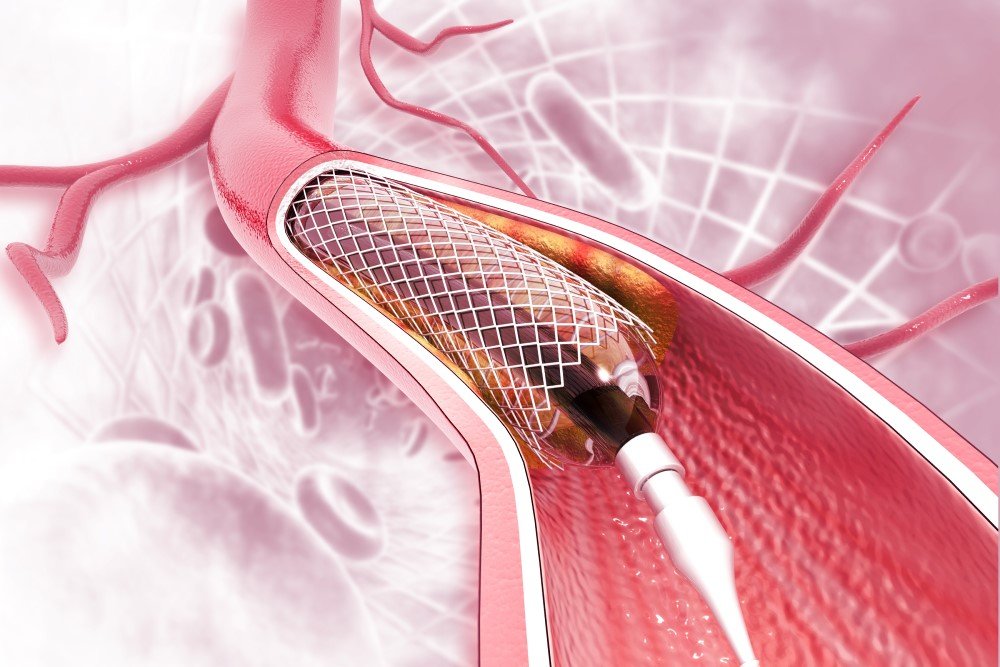
Angioplasty and stenting
Angioplasty and stenting are minimally invasive procedures used to open narrowed or blocked blood vessels, most commonly the coronary arteries that supply the heart. These procedures improve blood flow, reduce symptoms, and prevent serious complications such as heart attack or stroke.
Angioplasty widens the blocked artery, while a stent keeps it open long term.
Why Angioplasty or Stenting Is Needed
Blocked arteries develop due to atherosclerosis, a buildup of fatty plaques inside vessel walls. Reduced blood flow can cause:
- Chest pain (angina)
- Shortness of breath
- Fatigue during activity
- Heart attack
- Limb pain in peripheral artery disease
Angioplasty and stenting restore circulation quickly and effectively when medications alone are insufficient.
How Angioplasty Is Performed
Angioplasty is usually performed under local anesthesia and mild sedation. The procedure typically lasts 30 to 90 minutes.
Step-by-step process:
- A thin catheter is inserted through an artery in the wrist or groin.
- The catheter is guided to the blocked artery using live X-ray imaging.
- A small balloon at the catheter tip is inflated at the blockage site.
- The balloon compresses plaque against the artery wall.
- Blood flow improves immediately after balloon expansion.
This technique relieves obstruction without the need for open surgery.
What Is a Stent?
A stent is a small metal mesh tube placed inside the artery after angioplasty. It acts as a scaffold, preventing the artery from narrowing again.
Types of stents include:
- Bare-metal stents (BMS)
- Drug-eluting stents (DES) that release medication to prevent re-blockage
Drug-eluting stents are commonly used due to their lower risk of restenosis.
Benefits of Angioplasty and Stenting
- Minimally invasive with no major incision
- Immediate symptom relief
- Short hospital stay, often same-day discharge
- Quick recovery and early return to daily activities
- Reduced risk of heart attack
- Improved exercise tolerance and quality of life
These procedures offer excellent outcomes when performed by experienced specialists.
Who Is an Ideal Candidate?
Angioplasty and stenting are recommended for patients with:
- Significant coronary artery blockage
- Ongoing chest pain despite medication
- Acute heart attack
- Peripheral artery disease
- Carotid artery narrowing in selected cases
A detailed evaluation using angiography, CT scans, and cardiac tests helps determine suitability.
Recovery After Angioplasty/Stenting
Recovery is usually fast and uncomplicated. Most patients walk within hours and return home within 24–48 hours.
Post-procedure care includes:
- Blood-thinning medications to prevent clot formation
- Lifestyle changes such as diet control and exercise
- Smoking cessation
- Regular follow-up visits and heart monitoring
Cardiac rehabilitation further enhances long-term outcomes.
Possible Risks and Complications
Although angioplasty is safe, rare complications may occur:
- Bleeding or bruising at the catheter site
- Re-narrowing of the artery (restenosis)
- Blood clots inside the stent
- Allergic reaction to contrast dye
- Heart rhythm disturbances
Strict adherence to medications significantly lowers these risks.
Angioplasty vs. Bypass Surgery
| Feature | Angioplasty/Stenting | Bypass Surgery (CABG) |
|---|---|---|
| Invasiveness | Minimally invasive | Open-heart surgery |
| Recovery Time | Days | Weeks |
| Hospital Stay | Short | Longer |
| Best For | Single or limited blockages | Multiple or complex blockages |
Doctors select the best treatment based on artery condition and patient health.